Cardiopulmonary Exercise Test (CPET) is a special exercise test that combines ECG and VO2 measurements. CPET examines heart/lungs function during exercise and evaluates health and fitness condition.
It is suitable for cardiac, pulmonary patients, diabetics, obese, deconditioned people, sedentary and athletes.
CPET identifies the type of exercise needed to:
- improve strength
- improve fat burning
- improve performance
20 minutes for a test + between 10 and 15 minutes of preparation.
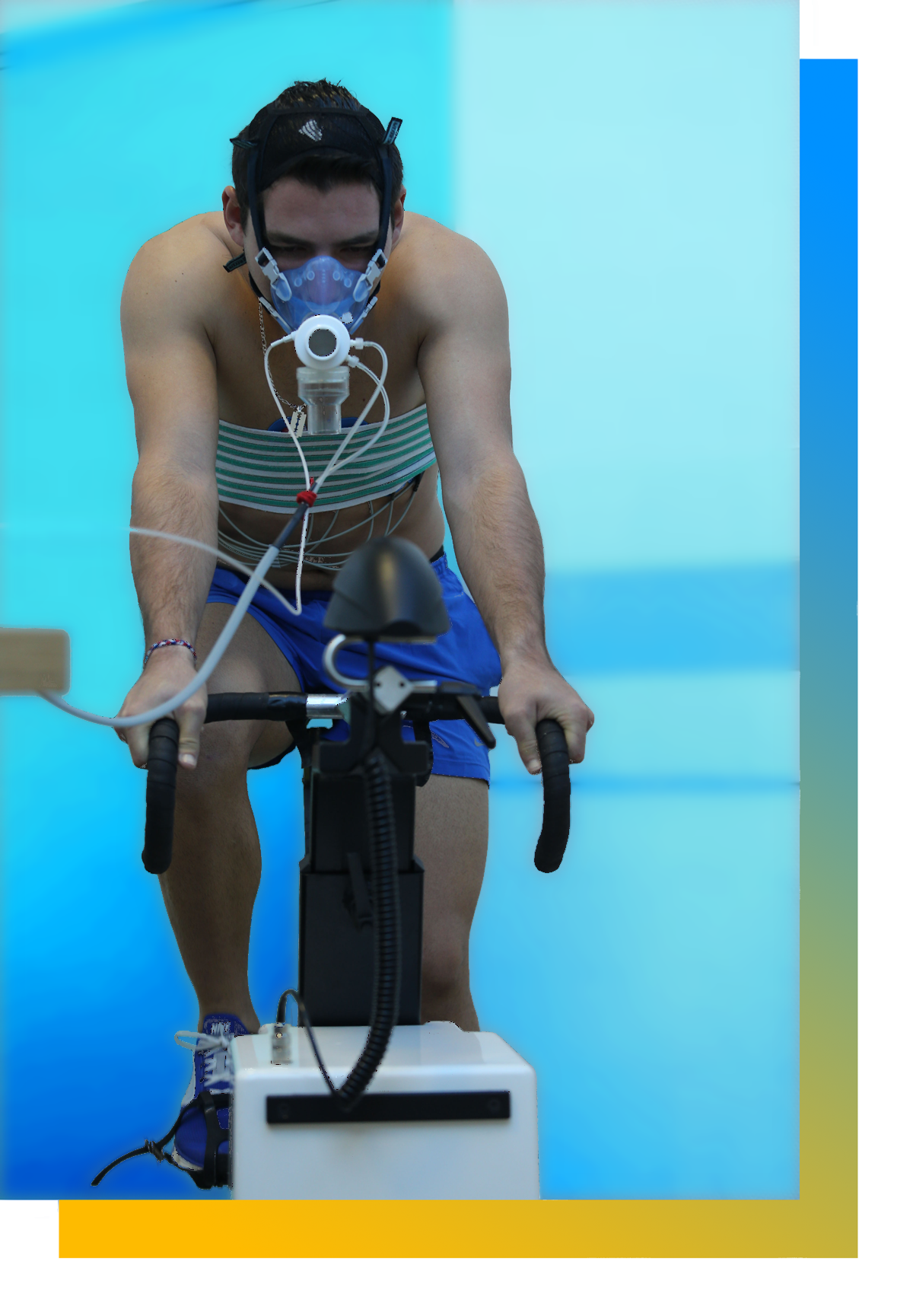
CPET is performed using an ergospirometer, a device that monitors pulmonary function and gas exchange, and an electrocardiograph, a device that monitors heart’s function and electrical activity.
Both devices are connected to a computer for online signal processing and data acquisition.
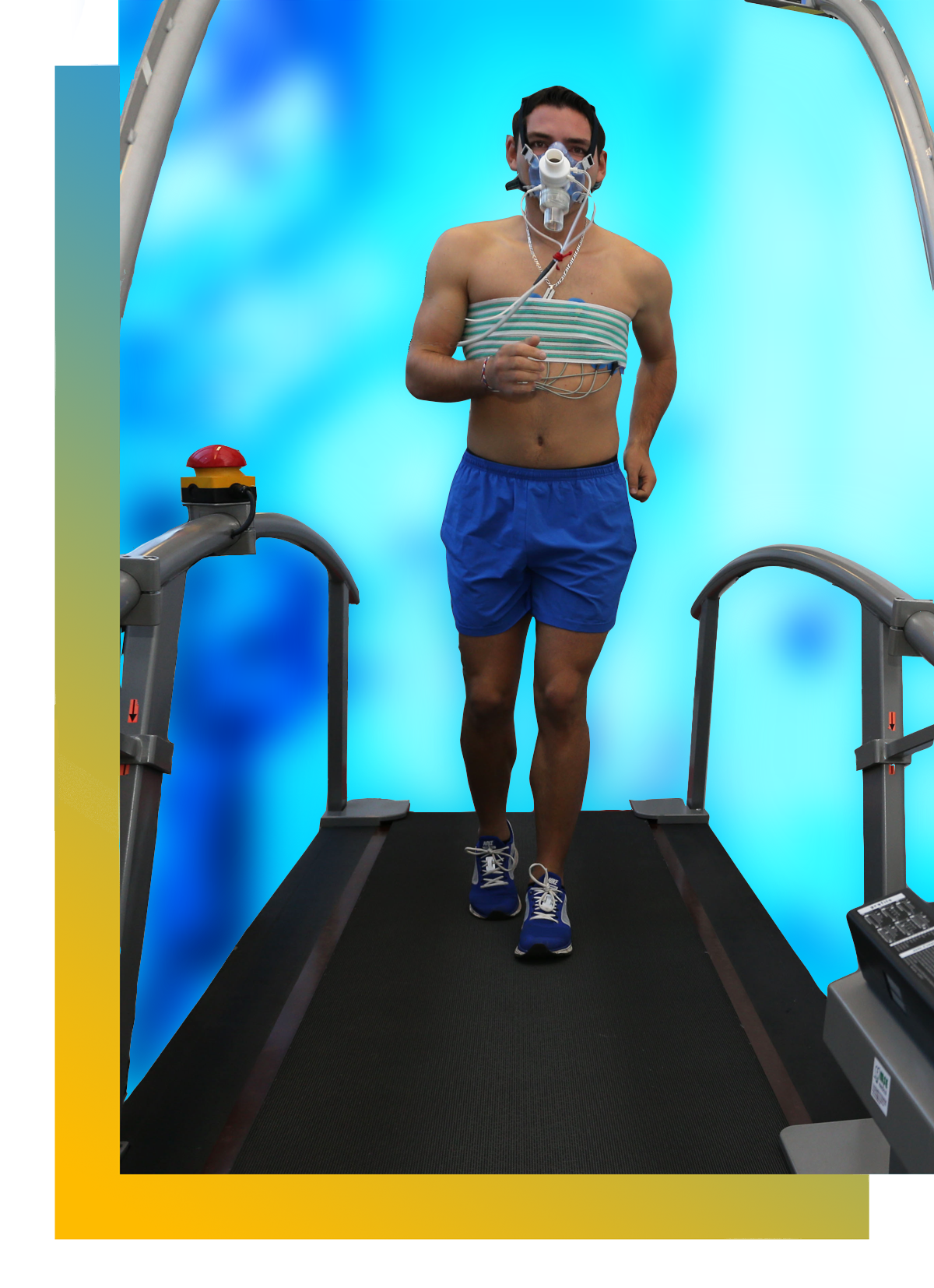
The examinee breathes through a facemask, which facilitates measurement of total breath volume, oxygen/carbon dioxide input and output.
Heart rate and electrical activity are monitored using 10 electrode patches, which are placed on the examinee’s chest.
Preparation and execution of CPET takes about 30-45 minutes. The examinee breathes slowly in standing position and then begins to exercise.
Exercise speed and intensity are progressively increased. The test stops when exercise reaches a certain level of difficulty or when the examiner thinks it is necessary.
During the test, the examinee is monitored by a cardiologist. Our staff training and laboratory equipment comply with specific security rules that ensure safety of the examinee.
Our cardiac rehabilitation program is a multidisciplinary fitness program, which includes physical training, nutritional and psychological consultations, to improve physical capabilities.
Anyone with the following health conditions can take advantage of cardiac rehabilitation:
• heart attack
• coronary artery disease, heart failure
• heart procedure or surgery, including coronary artery bypass graft (CABG) surgery
• percutaneous coronary intervention (PCI), including coronary angioplasty (balloon angioplasty) and stenting
• valve replacement, pacemaker, implantable cardioverter defibrillator (ICD)
• chronic obstructive pulmonary disease (COPD)
• obese with or without other health problems
• deconditioned or sedentary
If a person is hospitalized for acute cardiovascular event, appropriate time to begin cardiac rehabilitation is 1-3 weeks after being discharged from the hospital. Patients with chronic conditions should attend rehabilitation programs whenever it is recommended by their doctor.
Several studies show rehabilitation’s benefits in patients with cardiovascular problems, including:
• Improved resistance to effort, endurance
• Control of symptoms
• Improvement of lipid and lipoprotein levels in blood
• Weight loss
• Reduction of blood pressure
• Help to quit smoke
• Psychological improvement
• Stress reduction
• A better social reintegration
• Back to work faster
• Decrease of mortality rate in patients with heart failure
• Reduced progression of coronary atherosclerosis
• Reduced need for transplantation
Rehabilitation programs have very positive results in older patients, comparable to those of young people.
At the beginning of the program, a cardiopulmonary exercise test is performed by a specialized cardiologist, to examine physical performance and interpret patient’s symptoms.
After the test, the patient follows a 6 weeks personalized training. Patient re-evaluation is done in the middle and at the end of the program.
During each session, which lasts 3 hours, the patient is doing aerobic and strength exercises as well as discussion with the exercise physiologist.
During the program, the patient runs also a session with a nutritionist and psychologist to access nutritional problems, eliminate stress or quit smoking.
Before attending the program, all candidates should check with their GP and our team that they meet necessary requirements. Exercise during the program is completely controlled by online cardiac monitoring, so that a rehab cardiologist can intervene directly in any case.
By participating in a cardiac rehabilitation program you will improve quality of life and need less effort to accomplish your daily routines. Patients undergoing Cardiac Rehabilitation Programs can more successfully cope with their everyday activities.
 Διεύθυνση
 Τηλέφωνο
 Ακολουθήστε μας!



 Email
Email